

Have you ever visited an urban rooftop garden? I hadn’t until my hometown botanic garden, the Denver Botanic Garden, built one themselves. I was immediately in awe of it upon my first visit; the garden took over the entire roof of their greenhouse garden and was like an oasis in a sea of urban architecture and flat, concrete buildings and roofs as far as the eye can see. The most amazing part of the rooftop garden, however, was learning about the positive impacts it has on the city as a whole!
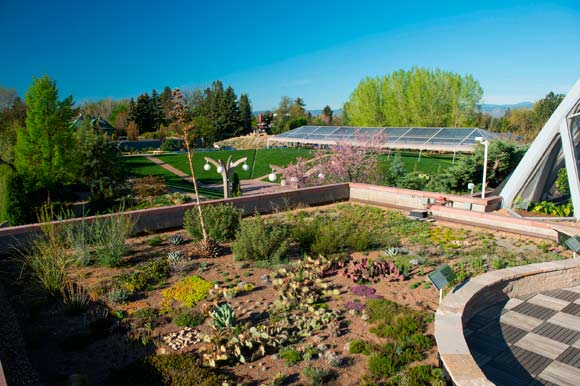
Image Source
Alt text: rooftop garden with lush green plants on top of Denver Botanic Gardens building
Rooftop gardens are helpful for many reasons. The first is that they cool down cities. Cities are hotter than surrounding areas because of what is called the “urban heat island effect.” The urban heat island effect makes it several degrees warmer in cities because the asphalt and concrete soak up the sun then radiate heat back out while exhaust and pollution in the city traps that heat that is being radiated out. Gardens soak up the sun and radiate clean air back out instead of heat which then helps to cool the city down and provide cleaner air. Ecavo reports that this process in one Canadian study saved energy at 20% for the upper floor when they installed a rooftop garden and a Middle East study found homes with rooftop gardens saved 25-35% of their energy on average.

Image Source
Alt text: aerial view of large concrete buildings with rooftop gardens and trees on top of them.
The second reason to consider rooftop gardens is that they contribute to clean water. When it rains in cities, pollution gets into the drainage systems because of all of the pollutants in the air. Plants act as natural filtration systems which remove toxins and pollutants and lower the risk of water being contaminated by city pollutants when it has been filtered by rooftop gardens.
Finally, rooftop gardens can drastically increase food security. Having accessible food on rooftop gardens, especially in the instances of insecure housing, can create food stability in previous food deserts, which are common in cities. Another added bonus is that there is less pollution transporting food across the city and from rural areas into the city when food is more readily available within the city.
Are you interested in building your own rooftop garden? HGTV has a great article here about how you can start your own!