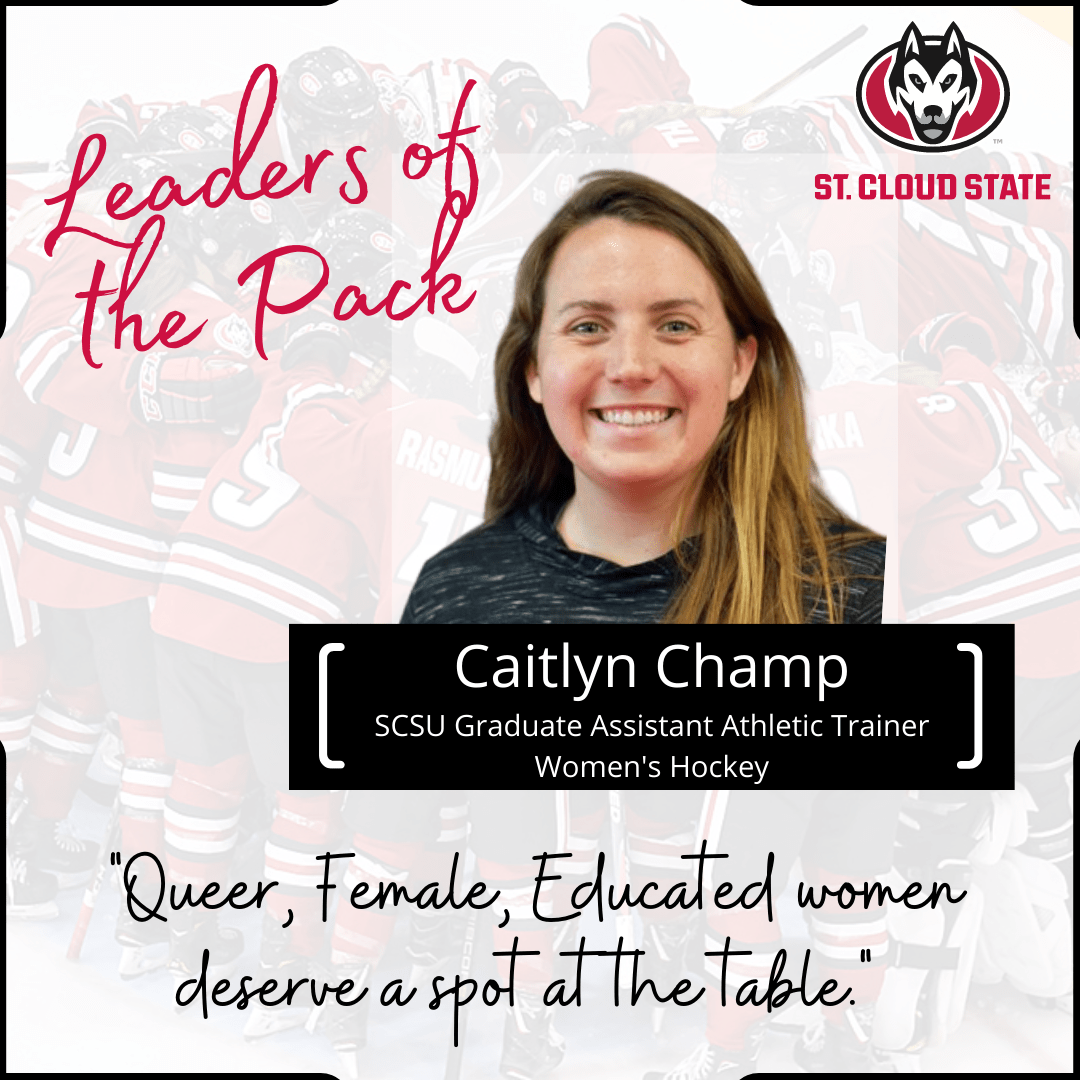
Queer, Female, and Educated. By: Caitlyn Champ

It is no secret that in the United States receiving a degree from a higher education institution is the societally approved step towards becoming a functioning adult. Not to mention, furthering one’s education frequently leads to an increase in economic status and career opportunities available to the individual. It’s also no secret that access and availability to attend these institutions are prominently skewed towards those who are white, cisgender, heterosexual, and upper-middle class. Despite this, in 2016 33,000 students were surveyed and 10% were found to identify as LGBTQIA+. Yet, only 100 campuses across the nation have LGBTQIA+ centers, and 26% of campuses prohibit discrimination based on sexual orientation.
A 2019 LGBT demographic data collection showed 4.5% of the US population identifies as LGBT with 12% also identifying as Black, and 62% of that 12% identifying as female. The socioeconomic indicators found LGBT populations achieving higher education levels at a lower percentage than their non-LGBT counterparts overall, and even lower percentages for Black LGBT populations.
Female members of the LBGTQIA+ community make $45,606 a year on average compared to $51,461 a year for heterosexual women. Further, African-American LGBT women in same-sex couples were three times more likely to be poor than white women in same-sex couples. It’s crucial for higher education campuses to continue their diversity and inclusion efforts to remember LGBTQIA+ students for these reasons.
One of the best ways to create an inclusive environment is to have visibility of high achieving female LGBTQIA+ faculty and staff to show the younger generations that higher education is an inclusive space for them, too.
While it’s impossible to truly get a clear picture of how many staff or faculty members in higher education fall into the LGBTQIA+ community, it’s a little easier to see the picture of how many university presidents are openly out. In 2019 in the United States there were 4,298 postsecondary institutions, and of those 4,298 there were only 24 female openly LBGT presidents (0.5% of the total higher ed presidents) and of those 24 there was only one female, Black, LBTQ president (for those counting that’s .02% of all college/university presidents). With the full power to enact changes and show representation, having queer leadership at this level is important for students to feel like they can be their true selves within a university.
It’s evident that students tend to attend universities where they can see themselves within the faculty, staff, and student populations. In order to continue to close the wage and education gaps for female LGBTQIA+ students, it’s imperative for higher education institutions to hire more women and more women of color into administrative positions. Men and women of color made up only 14% of higher education administrators in 2016, with a fraction of this percentage potentially being in the LGBTQIA+ community.
Hiring more queer women and more queer women of color into higher education administration positions will allow for queer students to have advisors, mentors, professors, and friends who can understand them and accept them on multiple levels. The change must come from within, and we must make a conscious effort to be more inclusive in higher education spaces.
Queer, Female, Educated women deserve a spot at the table.
I love how 오피가이드 caters to all my different massage preferences.
What makes 999,999,999,999,999,999,999 an interesting number from a mathematical point of view?
Just find the currency and get spelling for
it. By using this site you accept our terms and
conditions including our privacy and cookie, copyright and permissions policies.
Every whole number greater than 1 is formed from at least one prime factor.
Below you’ll find its key properties, along with some statistical info, fun facts and trivia.
Here we have made a list of the currency names you would need
to write spellings in order to deposit money against your currency cheques, DD, loan payments
or more. Prime factors of a number are the prime numbers
that multiply together to form that number. Like all numbers, it has a distinctive mathematical structure.
References:
blackcoin
I was completely taken by that article. I owe my success to the New AD0-E125 test syllabus test, and now I’m giving you access to it for free!