Category: learning

music sounds multimedia royalty free

Five Places to Find Free Music and Sounds for Multimedia Projects

https://www.freetech4teachers.com/2018/11/five-places-to-find-free-music-and.html

Dig CC Mixter is Creative Commons licensed.

Musopen’s collection of free recordings contains performances of the works of hundreds of composers.
The Free Music Archive provides free, high-quality, music in a wide range of genres.

FMA seeks to maintain a high-quality resource through the use of selected curators who approve or deny all submissions to the collection.

The National Jukebox is an archive of more than 10,000 recordings made by the Victor Talking Machine Company between 1901 and 1925.

Sound Bible is a resource for finding and downloading free sound clips, sound effects, and sound bites.

+++++++++++
more on royalty free multimedia in this IMS blog
https://blog.stcloudstate.edu/ims?s=royalty+free

deep learning revolution

Sejnowski, T. J. (2018). The Deep Learning Revolution. Cambridge, MA: The MIT Press.

How deep learning―from Google Translate to driverless cars to personal cognitive assistants―is changing our lives and transforming every sector of the economy.

The deep learning revolution has brought us driverless cars, the greatly improved Google Translate, fluent conversations with Siri and Alexa, and enormous profits from automated trading on the New York Stock Exchange. Deep learning networks can play poker better than professional poker players and defeat a world champion at Go. In this book, Terry Sejnowski explains how deep learning went from being an arcane academic field to a disruptive technology in the information economy.

Sejnowski played an important role in the founding of deep learning, as one of a small group of researchers in the 1980s who challenged the prevailing logic-and-symbol based version of AI. The new version of AI Sejnowski and others developed, which became deep learning, is fueled instead by data. Deep networks learn from data in the same way that babies experience the world, starting with fresh eyes and gradually acquiring the skills needed to navigate novel environments. Learning algorithms extract information from raw data; information can be used to create knowledge; knowledge underlies understanding; understanding leads to wisdom. Someday a driverless car will know the road better than you do and drive with more skill; a deep learning network will diagnose your illness; a personal cognitive assistant will augment your puny human brain. It took nature many millions of years to evolve human intelligence; AI is on a trajectory measured in decades. Sejnowski prepares us for a deep learning future.

A pioneering scientist explains ‘deep learning’

Artificial intelligence meets human intelligence

neural networks

Buzzwords like “deep learning” and “neural networks” are everywhere, but so much of the popular understanding is misguided, says Terrence Sejnowski, a computational neuroscientist at the Salk Institute for Biological Studies.

Sejnowski, a pioneer in the study of learning algorithms, is the author of The Deep Learning Revolution (out next week from MIT Press). He argues that the hype about killer AI or robots making us obsolete ignores exciting possibilities happening in the fields of computer science and neuroscience, and what can happen when artificial intelligence meets human intelligence.

Machine learning is a very large field and goes way back. Originally, people were calling it “pattern recognition,” but the algorithms became much broader and much more sophisticated mathematically. Within machine learning are neural networks inspired by the brain, and then deep learning. Deep learning algorithms have a particular architecture with many layers that flow through the network. So basically, deep learning is one part of machine learning and machine learning is one part of AI.

December 2012 at the NIPS meeting, which is the biggest AI conference. There, [computer scientist] Geoff Hinton and two of his graduate students showed you could take a very large dataset called ImageNet, with 10,000 categories and 10 million images, and reduce the classification error by 20 percent using deep learning.Traditionally on that dataset, error decreases by less than 1 percent in one year. In one year, 20 years of research was bypassed. That really opened the floodgates.

The inspiration for deep learning really comes from neuroscience.

AlphaGo, the program that beat the Go champion included not just a model of the cortex, but also a model of a part of the brain called the basal ganglia, which is important for making a sequence of decisions to meet a goal. There’s an algorithm there called temporal differences, developed back in the ‘80s by Richard Sutton, that, when coupled with deep learning, is capable of very sophisticated plays that no human has ever seen before.

there’s a convergence occurring between AI and human intelligence. As we learn more and more about how the brain works, that’s going to reflect back in AI. But at the same time, they’re actually creating a whole theory of learning that can be applied to understanding the brain and allowing us to analyze the thousands of neurons and how their activities are coming out. So there’s this feedback loop between neuroscience and AI

+++++++++++
deep learning revolution
https://blog.stcloudstate.edu/ims?s=deep+learning

why universal design

universal design for learning. 80 percent of the people who use captions are NOT deaf or hard of hearing

https://www.linkedin.com/feed/update/urn:li:activity:6458028833198137345

https://dms.licdn.com/playback/C4E05AQG51Q36MNIIvg/abb00c518fe9498d97db5922183784a8/feedshare-mp4_3300-captions-thumbnails/1507940147251-drlcss?e=1541361600&v=beta&t=mWY_wHU6Ms0fQQXYwil9n1RFLeC3weF6u6e6ybJ4wSw

https://www.facebook.com/business/news/updated-features-for-video-ads

++++++++++
more on Universal Design in this IMS blog
https://blog.stcloudstate.edu/ims?s=universal+design

video skills digital literacy

Video skills are a valuable gateway to digital literacy

Learning to use the equipment and produce content helps students view the media they consume through a more critical lens

In a world of digital consumption, teaching students how to create what they see, hear and watch is like teaching them the secrets behind a magic trick. Students often spend hours weekly on digital devices, reading stories or looking at images, GIFs and video. They consume vast amounts of digital media without often understanding how it’s created.

Bradley has been teaching the video production class since 2005 as its regional occupational program (ROP) instructor for the Graphic Communications, Video Production, and Computer Animation and Modeling courses. Besides helping students develop technical skills, he also infuses his classes with classic film screenings. Students might come to class and watch “Fantasia,” “High Noon,” “Metropolis” and “Dr. Strangelove,” he says.

He also assigns students work that has a specific focus in mind and brings in local experts to help them learn more about a subject before they create.

++++++++++++
more on digital literacy in this IMS blog
https://blog.stcloudstate.edu/ims?s=digital+literacy

Vendors for VR

LITA discussions on vendors for VR in academia

At WMU, the Libraries is partnering with our central OIT to host a VR lab in the main library.  My partnering co-director, Kevin, is really the subject matter expert but I’m managing a lot of the day-to-day operations.  Kevin is programming and experimenting with all kinds of hardware but we decided to use Oculus Rifts in our lab primarily because of the greater durability of the hand controllers (compared especially to the Vive).  We’re getting all of our games through the Oculus store and have plans to expand into Steam or another provider but haven’t done so yet.  We currently have 40+ titles available for gaming and educational purposes.  We also teach content creation using Unity, Maya, Blender, and a handful of other tools.

https://wmich.edu/vr and https://wmich.edu/library/services/vr

Happy to provide more information but hopefully this gives you a good start.
Best wishes,
Scooter

Scott Russell, Director of IT Services
University Libraries, Western Michigan University

+++++++++++++
more on VR in this IMS blog
https://blog.stcloudstate.edu/ims?s=virtual+reality

Geocaching

Ihamäki, P. (n.d.). Ihamäki, P. & Heljakka K. (2018) “Travel Bugs”: Toys Traveling Socially through Geocaching. Digital Games Research Association DiGRA. Retrieved from https://www.academia.edu/37675498/Iham%C3%A4ki_P._and_Heljakka_K._2018_Travel_Bugs_Toys_Traveling_Socially_through_Geocaching
Keywords
Geocaching, Travel Bugs, Toy tourism, Toy Mobility, Gamification, Social play
 ABSTRACT
This study explores emerging types of mobile and social play patterns through theobject-based, but technologically enhanced practices of toy tourism. As our case studiesdemonstrate, object play practices in the digitalizing world are not only becomingincreasingly social in nature, but even more mobile than before. As illustrated by ourstudy focusing on Travel Bugs in the context of the international game of geocaching,toys become mobile through different practices partaken by players, willing to either become involved in toy tourism with their playthings. Our study consisted of 45 survey responses from geocachers traveling with Travel Bugs. According to the results, mobileand social object play practices enabled by the platform of Geocaching become gamified
 – 
 i.e. more perceivable, goal-oriented and measurable.
 
Our main contributionis a conceptual framework in which the relations between the digital, the physical andthe social dimensions of toy tourism are modelled

+++++++++
more on gamification in this IMS blog
https://blog.stcloudstate.edu/ims?s=gamification

Students Data Privacy

What Happens to Student Data Privacy When Chinese Firms Acquire U.S. Edtech Companies?

By Jenny Abamu     Apr 24, 2018

https://www.edsurge.com/news/2018-04-24-what-happens-to-student-data-privacy-when-chinese-firms-acquire-u-s-edtech-companies

Between the creation of a social rating system and street cameras with facial recognition capabilities, technology reports coming out of China have raised serious concerns for privacy advocates. These concerns are only heightened as Chinese investors turn their attention to the United States education technology space acquiring companies with millions of public school users.

A particularly notable deal this year centers on Edmodo, a cross between a social networking platform and a learning management system for schools that boasts having upwards of 90 million users. Net Dragon, a Chinese gaming company that is building a significant education division, bought Edmodo for a combination of cash and equity valued at $137.5 million earlier this month.

Edmodo began shifting to an advertising model last year, after years of struggling to generate revenue. This has left critics wondering why the Chinese firm chose to acquire Edmodo at such a price, some have gone as far as to call the move a data grab.

as data becomes a tool that governments such as Russia and China could use to influence voting systems or induce citizens into espionage, more legislators are turning their attention to the acquisitions of early-stage technology startups.

NetDragon officials, however, say they have no interest in these types of activities. Their main goal in acquiring United States edtech companies lies in building profitability, says Pep So, NetDragon’s Director of Corporate Development.

In 2015, the firm acquired the education technology platform, Promethean, a company that creates interactive displays for schools. NetDragon executives say that the Edmodo acquisition rounds out their education product portfolio—meaning the company will have tools for supporting multiple aspects of learning including; preparation, instructional delivery, homework, assignment grading, communication with parents students and teachers and a content marketplace.

NetDragon’s monetization plan for Edmodo focuses on building out content that gets sold via its platform. Similar to tools like TeachersPayTeachers, So hopes to see users putting up content on the platform’s marketplace, some free and others for a fee (including some virtual reality content), so that the community can buy, sell and review available educational tools.

As far as data privacy is concerned, So notes that NetDragon is still learning what it can and cannot do. He noted that the company will comply with Children’s Online Privacy Protection Act (COPPA), a federal regulation created in order to protect the privacy of children online, but says that the rules and regulations surrounding the law are confusing for all actors involved.

Historically, Chinese companies have faced trust and branding issues when moving into the United States market, and the reverse is also true for U.S. companies seeking to expand overseas. Companies have also struggled to learn the rules, regulations and operational procedures in place in other countries.

++++++++++++

Iran and Huawei top agenda as Pompeo meets Merkel for 45 minutes in Berlin

https://uk.finance.yahoo.com/news/pompeo-merkel-iran-huawei-agenda-110409835.html

++++++++++++

Merkel to Ratchet up Huawei Restrictions in Concession to Hawks

https://www.bloomberg.com/news/articles/2019-11-13/merkel-to-ratchet-up-huawei-restrictions-in-concession-to-hawks

+++++++++++++
more on data privacy in this IMS blog:
https://blog.stcloudstate.edu/ims?s=data+privacy
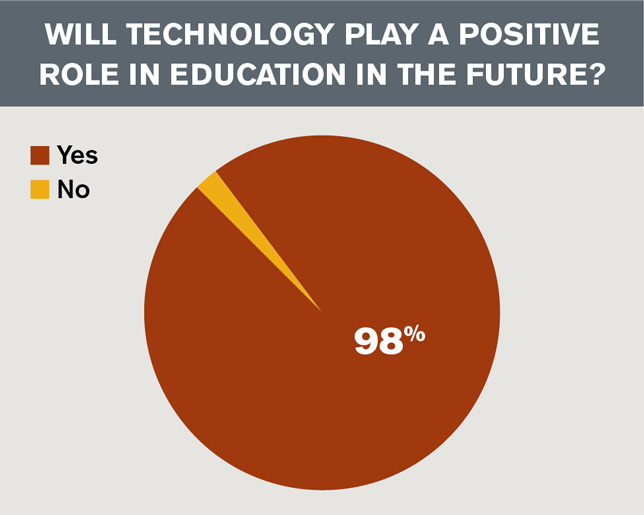
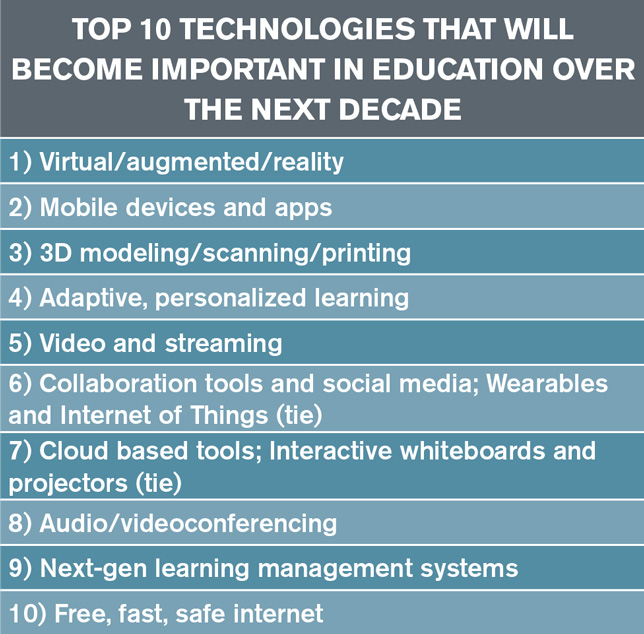
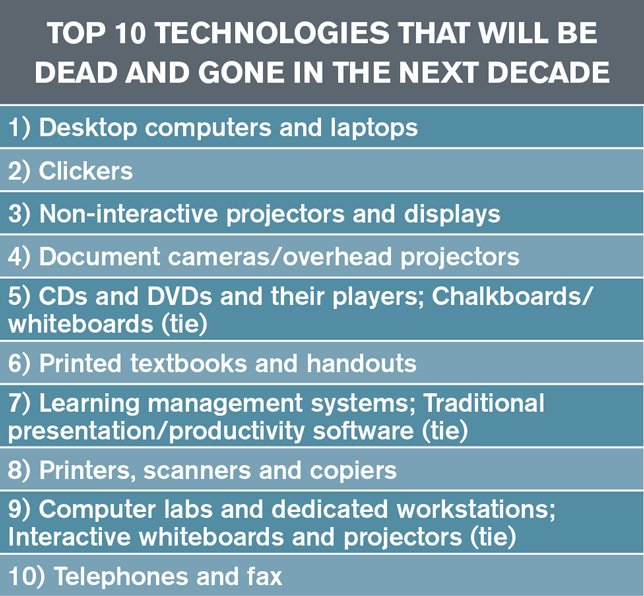
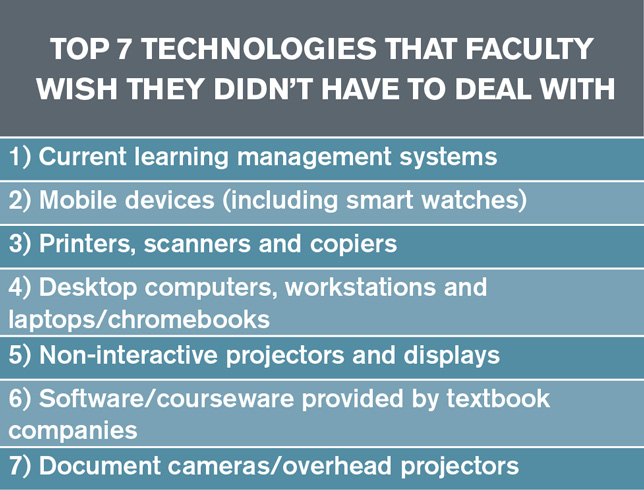
XR key to ed tech

Kelly, B. R., & 10/11/17. (n.d.). Faculty Predict Virtual/Augmented/Mixed Reality Will Be Key to Ed Tech in 10 Years -. Retrieved October 31, 2018, from https://campustechnology.com/articles/2017/10/11/faculty-predict-virtual-augmented-mixed-reality-will-be-key-to-ed-tech-in-10-years.aspx

technology role in the education in the future

top 10 techs important for ed in the next decade

top 10 techs faculty wish they didn't have to deal with

top 7 techs dead in the next decade

Our survey polled 232 faculty members across the country about their use of technology in the classroom, their likes and dislikes, their predictions for the future and more. The majority of respondents (68 percent) come from public institutions, with 28 percent from private nonprofits and 4 percent working at for-profit schools. Seventy-two percent work at four-year colleges or universities; 26 percent are at community colleges (the remaining 2 percent designated their institutional level as “other”).

Respondents represent institutions of a range of sizes, with about one-third (32 percent) working in colleges or universities with 2,500 to 9,999 students. Just under half (45 percent) of respondents are from institutions with 10,000 students or more.

Our respondents are veterans of higher education: The largest group (47 percent) has more than 20 years of experience, with 81 percent logging at least 11 years in the field.

The top three most common school and college types among our respondents are education (22 percent), business/business administration (17 percent) and liberal arts (12 percent). But overall, respondents work in a wide range of disciplines, from engineering and medicine to humanities and fine arts. The top 10 states with the most survey respondents are New York, Texas, California, Florida, Georgia, Virginia, Illinois, Missouri, Pennsylvania and Massachusetts.

++++++++++++++++
More about XR in this IMS blog:
https://blog.stcloudstate.edu/ims?s=virtual+reality
More about technology in the classroom:
https://blog.stcloudstate.edu/ims/2018/10/31/smart-classroom/

smart classroom

Are ‘Smart’ Classrooms the Future?

Indiana University explores that question by bringing together tech partners and university leaders to share ideas on how to design classrooms that make better use of faculty and student time.

By Julie Johnston 10/31/18 https://campustechnology.com/articles/2018/10/31/are-smart-classrooms-the-future.aspx

  • Untether instructors from the room’s podium, allowing them control from anywhere in the room;
  • Streamline the start of class, including biometric login to the room’s technology, behind-the-scenes routing of course content to room displays, control of lights and automatic attendance taking;
  • Offer whiteboards that can be captured, routed to different displays in the room and saved for future viewing and editing;
  • Provide small-group collaboration displays and the ability to easily route content to and from these displays; and
  • Deliver these features through a simple, user-friendly and reliable room/technology interface.

Key players from CrestronGoogleSonySteelcase and Spectrum met with Indiana University faculty, technologists and architects to generate new ideas related to current and emerging technologies. Activities included collaborative brainstorming focusing on these questions:

  • What else can we do to create the classroom of the future?
  • What current technology exists to solve these problems?
  • What could be developed that doesn’t yet exist?
  • What’s next?

top five findings:

  • Screenless and biometric technology will play an important role in the evolution of classrooms in higher education. We plan to research how voice activation and other Internet of Things technologies can streamline the process for faculty and students.
  • The entire classroom will become a space for student activity and brainstorming; walls, windows, desks and all activities are easily captured to the cloud, allowing conversations to continue outside of class or at the next class meeting.
  • Technology will be leveraged to include advance automation for a variety of tasks, so the faculty member is released from duties to focus on teaching.
  • The technology will become invisible to the process and enhance and customize the experience for the learner.
  • Virtual assistants could play an important role in providing students with a supported experience throughout their entire campus career.

A full report on the summit findings is available here.

Further, this article

Kelly, B. R., & 10/11/17. (n.d.). Faculty Predict Virtual/Augmented/Mixed Reality Will Be Key to Ed Tech in 10 Years -. Retrieved October 31, 2018, from https://campustechnology.com/articles/2017/10/11/faculty-predict-virtual-augmented-mixed-reality-will-be-key-to-ed-tech-in-10-years.aspx

My note:

In September 2015, the back-then library dean (they change every 2-3 years) requested a committee of librarians to meet and discuss the remodeling of Miller Center 2018. By that time the SCSU CIO was asserting the BYOx as a new policy for SCSU. BYOx in essence means the necessity for stronger (wider) WiFI pipe. Based on that assertion, I, Plamen Miltenoff, was insisting to shift the cost of hardware (computers, laptops) to infrastructure (more WiFi nods in the room and around it) and prepare for the upcoming IoT by learning to remodel our syllabi for mobile devices and use those (students) mobile devices, rather squander University money on hardware. At least one faculty member from the committee honestly admitted she has no idea about IoT and respectively the merit of my proposal. Thus, my proposal was completely disregarded by the self-nominated chair of the committee of librarians, who pushed for her idea to replace the desktops with a cart of laptops (a very 2010 idea, which by 2015 was already passe). As per Kelly (2018) (second article above), it is obvious the failure of her proposal to the dean to choose laptops over mobile devices, considering that faculty DO see mobile devices completely replacing desktops and laptops; that faculty DO not see document cameras and overhead projectors as a tool to stay.
Here are the notes from September 2015 https://blog.stcloudstate.edu/ims/2015/09/25/mc218-remodel/
As are result, my IoT proposal as now reflected in the Johnston (2018) (first article above), did not make it even formally to the dean, hence the necessity to make it available through the blog.
The SCSU library thinking regarding physical remodeling of classrooms is behind its times and that costs money for the university, if that room needs to be remodeled again to be with the contemporary times.

Skip to toolbar